Sometimes Wrong But Never In Doubt
What they're saying.
A lesson in resiliency and fortitude, self-confidence and vulnerability.Bob ChapekFormer CEO, The Walt Disney Company
Vision, humility, persistence, and courage. George's journey is a blueprint for purpose-driven leadership.Richard DavisFormer CEO and Executive Chair, U.S. Bancorp
It's the loneliest feeling in the world to find yourself standing up when everybody else is sitting down.— Jerome Lawrence, epigraph
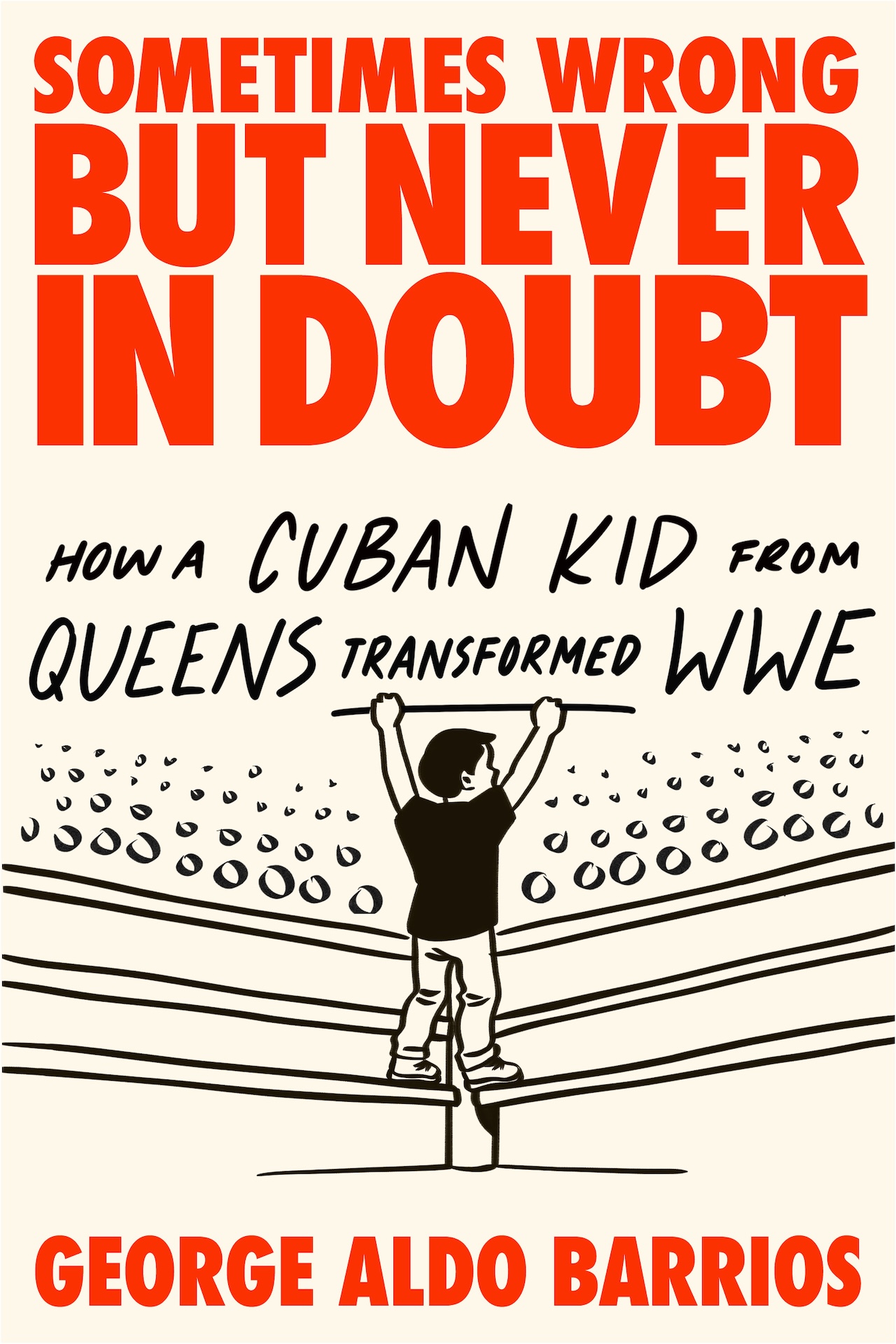
Sometimes Wrong. Never In Doubt.
From a rent-controlled apartment in Flushing, Queens (zip code 11354), to the C-suite of a $9.3 billion sports entertainment empire, George Aldo Barrios built a career nobody saw coming.
The son of Cuban exiles. Fatherless at nine. A talented misfit who nearly flunked out of high school. And, eventually, the architect alongside his partner Michelle Wilson of one of the most dramatic corporate transformations in modern media history.
This is the story of betting on yourself when no one else will. Of standing up when everybody else is sitting down. Of getting knocked down, getting fired, getting written off, and getting back up to do it all again.
A 12-year transformation.
From legacy brand to media juggernaut.
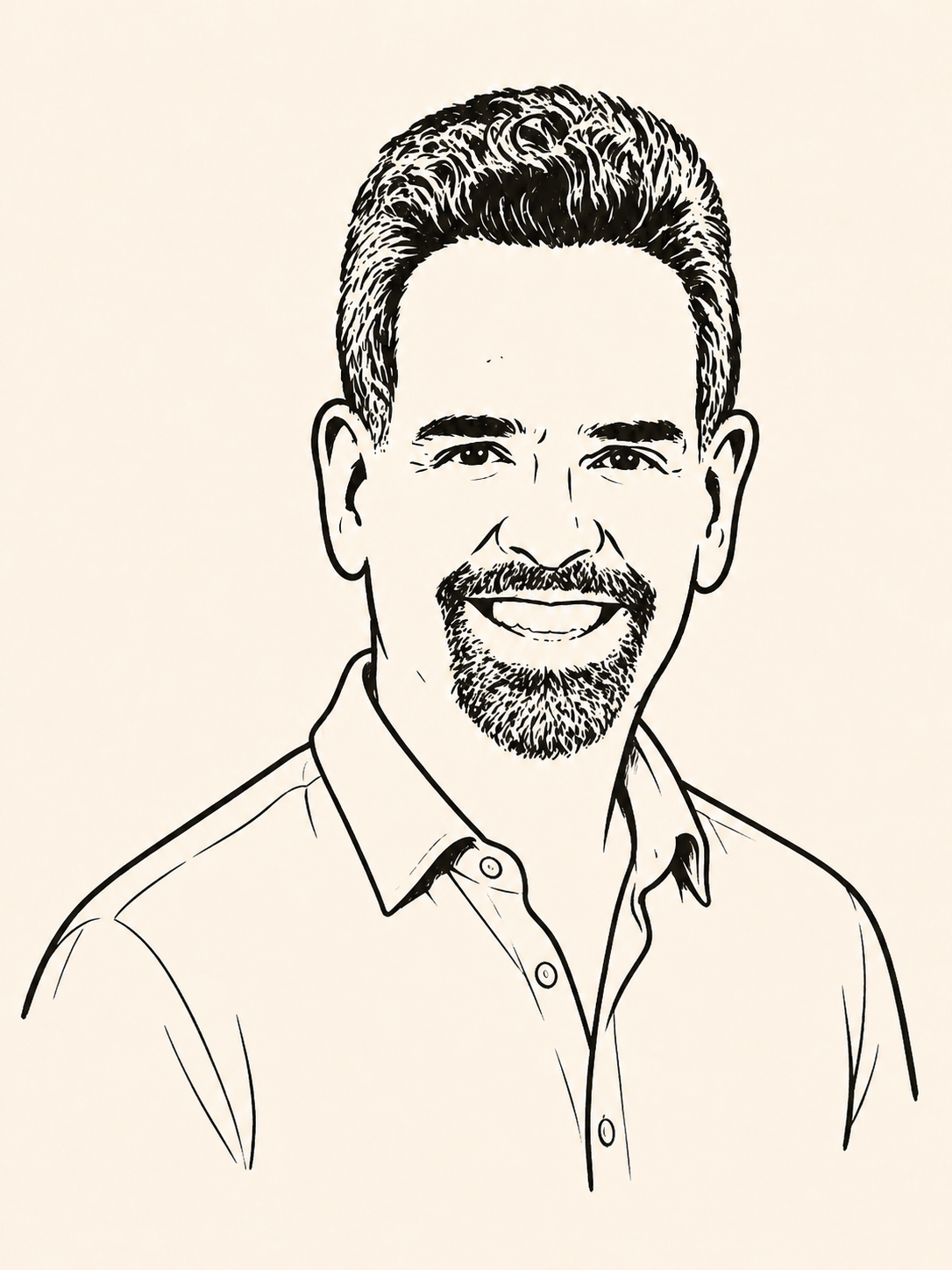
George Aldo Barrios
Co-Founder and Co-CEO of Isos Ventures, where he invests in growth opportunities across sports, entertainment, and media. Investor in and Director of Global Sport Group, the CVC-backed sports investment platform whose portfolio includes La Liga, Ligue 1, the WTA, and Equine Network — where he is also an investor and Co-Chair. He serves as a Trustee of the University of Connecticut.
George is best known for his tenure as Co-President and Board Member of WWE, where he helped transform the company into a global, multi-platform entertainment business and helped lay the groundwork for its merger with UFC to form TKO Group. Earlier in his career, he held senior executive roles at The New York Times Company, Time Warner, HBO, and Praxair. He has served on the boards of Make-A-Wish America, WWE, and Bowlero, and previously chaired the national Make-A-Wish Foundation. He holds an MBA from the University of Connecticut School of Business.
He lives in Fairfield, Connecticut with his wife Carol and their three daughters.
Stunningly competent women.
One incredible father.
The Wolf at the table.
Carl Jung called it the Shadow archetype. The repressed parts of the personality we hide in our unconscious minds. George has named his Wolf, and the book doesn't apologize for him. Problem Child. The Unrepentant. The Wolf. The drive to compete, to win, and to push through obstacles that wear most people down. It's the engine that took a Cuban kid from Queens to the boardroom that built TKO.
The book makes peace with him. So does the site.
From inspiration to the height of success.
Twelve Battle-Tested Mantras.
Reflection makes us wise. Experience does not. The twelve principles distilled below were not handed down. They were pressure-tested against thirty years of decisions, mistakes, and recoveries. Read them as a working framework, not a manifesto.
Do the work, then move with confidence.
Confidence without the work is bravado. The marriage of the two is what produces results worth the risk.
You are your first zip code.
Where you grew up wires the operating system. Acknowledge it, evolve from it, but never forget it.
Pain is the entry fee for growth.
Growth rarely feels like growth in the moment. It feels like pain. That's the cost of admission.
Clarity is the ultimate leadership trait.
The best leaders make complexity feel simple, human, and real. Lead with clarity, deliver it with conviction.
Loyalty isn't a tagline.
Real loyalty is earned through time, scars, and action. Not slogans.
Original thinking is lonely. Until it isn't.
Bold ideas don't show up looking obvious. They look wrong, arrogant, or dangerous. Until they prove themselves otherwise.
The business model is the strategy.
Strategy starts with understanding the system. Who creates value, who captures it, where the leverage lies.
Storytelling is a leadership skill.
Strategy lives in the model. Belief lives in the story. Both are required.
Find the right question.
Great answers are like copper. The right question is gold. Spend more time on the question than the answer.
Invert. Always invert.
Flip the assumption. The thing you're fighting against may be the thing that wants to work for you.
Use first principles over comparisons.
People reason by analogy. It's a shortcut and usually wrong. Break it down to atoms, then build it back up.
Strategy is just talk until you execute.
Billion-dollar strategies die in the PowerPoint. Execution isn't the follow-up. It's the main event.
From the Prologue.
Called Back Into the Ring
When you’re in business, if you’re doing things right, sooner or later you’ll have to risk moving against the herd. Some people call this having vision. They prize it as a rare thing. From my point of view, lots of people have vision but few have the guts to act on it. It’s the action that’s the key. Without action, all the vision in the world amounts to talk and wishes and nonsense.
A question I get all the time: Why don’t more people act on their vision?
A fine answer has been given to us by Jerome Lawrence, the great American playwright who wrote Inherit the Wind. “It’s the loneliest feeling in the world to find yourself standing up when everybody else is sitting down. To have everybody look at you and say, ‘What’s the matter with him?’ . . . I know what it feels like. Walking down an empty street, listening to the sound of your own footsteps. Shutters closed, blinds drawn, doors locked against you. And you aren’t sure whether you’re walking toward something, or if you’re just walking away.”
This loneliness—and the courage to push through it—is what this book is about. It tells the story of how I stood up when most other people sat down, and how my willingness to take risks and put my neck on the line helped me pull off the largest transaction in sports history. It’s about the challenges I faced and the prices I paid along the way. Bottom line, it’s a story I hope will inspire you to believe in your own vision, to push through whatever obstacles arise, and to bet on yourself when no one else will.
Before we get started, I’ll make a deal with you. These pages contain no bullshit. I won’t sugarcoat anything or skirt the unpleasant parts. In plain language, I’ll tell you about all the times I miscalculated and fucked things up. In my view, that sets the stage for you to learn from these incidents so that maybe—just maybe—you won’t have to go through what I did. Does that sound fair?
Wait. One last thing. Spoiler alert. Sometimes, if we’re lucky, life gives us a chance to rewrite our unhappy endings. This book tells that story too.
Late November, 2022. I was visiting my mother, who was ninety-eight years old. To the world, she was Erena Gloria Barrios. To me, she was Mami. Always had been, always would be. (Here in this book, I’ll just call her Mom because, in English, it means the same thing.)
My wife, Carol, and I had just moved Mom into a beautiful one-bedroom apartment at a top-of-the-line independent living facility down in Florida called the Palace at Coral Gables. Picture an elegant high-rise whose old-world interior was ripped from the Waldorf-Astoria. Sumptuous furnishings. Lavish salons. Scroll mirrors. Hand-woven carpets. Chandeliers dripping with crystal. Marble statues gazing down from niches carved into the walls. The place had no chairs, only Renaissance thrones with high backs, carved inlays with lots of gold paint, and cushions upholstered in red and blue velvet.
Like most palaces, this one cost a fortune. So fucking what? It’s strange what happens when you finally make real money. The important stuff in life doesn’t change. You still love your wife and your kids. You still have your friends. But certain shit becomes untenable, like watching your mother pace back and forth through the same two-bedroom rent-controlled apartment where she raised you in Flushing, Queens, a block from the 7 train.
That place is still burned in my mind. We lived close enough to LaGuardia Airport that if you climbed to the roof of our building and stretched out your arm, you could almost scratch the belly of a Boeing 747 as it took off or landed. Plus, we had a firehouse right across the street, with hook-and-ladder trucks howling day and night. The streets were choked with people of every race, every ethnicity, a bouillabaisse of New York (and therefore America) yelling at each other 24/7. On top of all this, the Long Island Rail Road ran directly behind our building, so every five minutes or so, ancient trains would rattle and clatter east or west, a thunderous din.
Overwhelming noise and confusion. To the out-of-towner, it felt like chaos. To me, it was soothing. I loved it. How could I not? I grew up as a child of chaos.
Mom had lived in that neighborhood for the better part of fifty years. It was her home. Her sisters lived in the same building; they were my surrogate parents. Hell, the whole neighborhood was. Flushing is home to working-class people with solid working-class values. Maybe you’ve heard the saying that you’ll always be your first zip code. I believe that, which is why I’ll always be 11354.
But as time passed, Flushing didn’t suit Mom anymore. By the time she hit ninety-five, most of her friends had passed away, including two of her sisters. Another sister, my Aunt Marta, had moved to Miami. Carol and I had to face facts. We approached Mom and told her we’d like to bring her closer to us, and she agreed.
We thought the apartment we got her in Shelton, Connecticut, was perfect, a nice two-bedroom place in one of those new yuppie buildings that pop up everywhere now. Mom was only seventeen miles up Route 8 from our home in Fairfield, which meant we could visit whenever we wanted. She enjoyed her new digs with the fancy lobby, having her son stop by every weekend for lunch, plus our regular family dinners at the house where she could visit her three granddaughters, the joy of her life. Then COVID hit and we all became shut-ins. No more lunches with me, no more dinners with Carol and the girls. I’m sure you remember that time. It was awful for everyone, but particularly for the elderly who were more isolated and vulnerable.
So, Carol and I started talking again. We agreed that Mom shouldn’t spend her golden years like a prisoner in a supermax penitentiary. She should feel right at home, like the old days. That’s why we moved her to Miami. Cubans created that city. We chose the Palace at Coral Gables because about half its residents were Cuban. The other half were snowbirds, mostly New Yorkers on the north end of eighty, but even they spoke a little Spanish. This meant that Mom could stroll the facilities, hearing familiar Cuban phrases:
“¡No comas mierda!” A quaint expression, it literally means “Don’t eat shit” but translates to something like “Don’t be a dumbass.” Or:
“¡No tiene pelos en la lengua!” Literally, “He doesn’t have hair on his tongue,” meaning he has no filter. Whatever he thinks, he says it out loud. And lest we forget:
“Él es un zero a la izquierda.” “He is a zero to the left,” which implies he’s worthless and should be ignored.
The effect all this had on my mom was amazing. She sprang back to life! Suddenly, she was dressing up again, putting on jewelry, making sure that her hair was just right. Finally, after so long, I began to smell Must by Cartier whenever she was with us—Mom’s signature scent. She became a staple at the Palace’s daily happy hour. She visited old friends who lived close by while making new friends in the building. The look in her eyes was as if someone standing close by was shining a bright but gentle light in them. And she was smiling again.
Mom’s sister, my Aunt Marta, lived just a few miles away in Miami, and every now and then they’d get together, along with some old friends, to talk and swap memories. When Mom confessed how she missed seeing me so often, I began booking flights to Miami every month so I could visit with her for a few days. All in all, I’d never seen her happier.
Now: Imagine Mom and me sitting in the lavish main lounge at the Palace. Happy hour was underway. White-haired folks were grabbing seats near the bar, which was big enough that you could land a two-seater Cessna on it. The grand piano was humming. The player spoke fluent English and Spanish and switched back and forth between Celia Cruz and Frank Sinatra—”Guantanamera” with a side order of “Come Fly With Me” sprinkled with hits from the fifties and sixties. All while mini spring rolls, cubes of cheddar, pigs in blankets, and tooth-picked stacks of prosciutto and melon got lifted off bright silver trays zooming past us as butlered hors d’oeuvres.
Everything I’ve just described was the daily pregame ritual leading up to the night’s main event, the Palace’s gourmet dinner. Table service if you wanted, buffet available if you didn’t. You could get chicken Francese or eggplant parmigiana on Italian night, beef bourguignon and stout-braised lamb shanks when the chef was going heavy on red meat. And there were regular nods to the Cuban clientele. Congrí. Pan con lechón. Masas de puerco. The list went on.
A young lady came by to take our drink order. Everyone knew Mom, who made friends fast when she wanted. This particular young lady was Cuban and knew Mom well. She put Mom down for a virgin tequila sunrise. She looked at me, smiled, and raised her eyebrows. I ordered a white wine. Because it was Florida. When in Rome.
When the server left, Mom and I sat on a couch that swallowed us whole, but I didn’t care. The look on her face said it all. She was in heaven, which meant I was too. We’d made it to this place together, against all odds. In my chest, my heart started swelling. But then, as so often happens in stories, the other shoe dropped. My phone started buzzing. Cue the theme song from The Twilight Zone.
I picked up my phone off the little end table where I’d left it and checked the screen, which said VINCE McMAHON. Above his name was a headshot of Vince with his hair slicked back. He didn’t have his new mustache, just that impish grin on his face; it looked good on a guy who was six foot two, weighed 250, and could bench press a Chrysler on an off day.
I was not expecting that phone call and it must have shown on my face. I’m a shitty poker player.
My mother narrowed her eyes at me. “¿Quién es?”
I tilted the phone so she could read the caller ID and see the picture. Her mouth fell open. “Vincent?”
She never let go of her old-world manners. He was always Vincent to her. She’d never met him in person though of course she’d heard all about him. From the papers, from the TV. From me. Some people got fooled by Mom’s walker, but that was a big mistake. At ninety-eight, she was sharp as a tack.
She arched one eyebrow at me. “¿Por qué te está llamando?” (Why is he calling you?)
I shrugged. “Yo no sé.”
This was true. I had no idea why Vince would call. He and I texted once in a while, but we hadn’t spoken in quite some time. Not since everything happened.
The lounge was too damn loud so I sent the call to voicemail, patted Mom’s hand, got up, and went to the adjoining library. It was a big space, beautiful mahogany paneling, lots of bookshelves. And empty right then. Perfect. I closed the French doors, took a seat, and thumbed a reply call.
I was nervous. This was Vince McMahon, one of the most successful entrepreneurs of the last hundred years. We’d worked together for twelve years, but I can’t say we’d ever been chummy. More like generals planning a battle, then leading our armies from the front. That was our style. Still is. We always led from the front. So no, we weren’t pals. More like brothers-in-arms. A powerful, complex relationship.
When I worked for Vince’s company, World Wrestling Entertainment, he would call me 24/7, and he never asked how I was doing or how my family was doing. Well, okay. He did that twice in twelve years, so infrequently I couldn’t help but notice when it happened. Mostly, we didn’t waste time on such things. There was always too much at stake. We plowed all our energies into moving the business forward. And boy, did we ever.
I signed on as company CFO in 2008. At that point, WWE was primarily a North American live event business that in the preceding years had averaged $400 million in revenue, $70 million in profit, and a stock price of $15. When I left in 2020, I’d been promoted to copresident alongside my friend and colleague, Michelle Wilson. WWE was approaching $1 billion in revenue and more than $200 million in profits. Our stock had peaked at $100—more than anyone had once thought possible.
But then Vince fired me, very publicly, very abruptly. So, yeah. Things felt a bit delicate.
Two rings and the line picked up. “Hey, George. How you doing?” That familiar gravelly chuckle that came from somewhere deep in his gut.
“I’m good, Vince. You?” A loaded question.
In March 2022, it came out that Vince had had extramarital affairs, at least one involving a female employee. Since this potentially put the company at risk, the WWE board launched an investigation. By June, they discovered that Vince had paid out $12 million to four women who’d all signed NDAs to restrict them from talking about their relationships. The blowback from all this was large enough that in July, Vince stepped away from his duties.
He was replaced as CEO by his daughter, Stephanie, and another executive. Not that it mattered. Regardless of his role, Vince retained a controlling interest in the company. But the timing could not have been worse. WWE was on the brink of negotiating global media rights, which were its largest source of revenue. No one knew what kind of impact Vince’s situation would have on those talks, but in my opinion from the outside looking in, the optics weren’t good.
If all this sounds like I was paying attention to Vince’s life or life at WWE, I’ve offered the wrong impression. By that point, I was too busy. Months after being let go from the company, Michelle and I founded our own investment advisory firm. Isos Capital had already scored our first big win with a $2.6 billion go-public deal with Bowlero, the largest bowling center operator in the world. More on that later.
In typical fashion, Vince got right to the point. “Big changes are coming,” he said. “The industry’s shifting.” He meant the sports entertainment sector. “So, George . . . remember how you used to say that thing?”
Of course I remembered. When you spend twelve years in the trenches with someone, you develop a shorthand. It was one of the many pleasures of working with Vince, the way we practically read each other’s minds. “Yup,” I said. “In the media sector, scale can drive value.” We’d had this conversation many times over my last two years at WWE.
“That’s it, yeah.” Vince paused. I could practically hear the gears turning in his head. “Right now, that’s all I’m thinking about.”
For the record, Vince is not your typical billionaire entrepreneur. Most of the ones I’ve met have an incredible grasp of their business and its economic fundamentals. Vince is no different. What makes him unique is his proprietary blend of three qualities: work ethic, optimism, and his uncanny ability to read people. Vince is a student of human behavior. He observes people, gets to know them, then uses this knowledge to stay at least three or four steps ahead of the game.
Actually, let’s make that four qualities. I forgot to say that Vince has deep instincts for showmanship. Take his onscreen persona. That tough guy image he’s cultivated? The mad man? The muscle-bound, swaggering villain? That’s not the guy I worked with. In truth, I’d always found Vince to be somewhat introverted, almost shy, and definitely tough to read. But underneath that exterior there was always a lurking intensity. He was always listening, parsing information, filing it away, reviewing it from all angles. It took Vince a long time to trust anyone, but over our more than twelve years together I felt like I’d earned that trust.
I think one of the things Vince appreciated about me was my hardscrabble upbringing. We used to one-up each other about who’d had a rougher time growing up. We never gave each other shit in the open; that kind of comedy routine would be too obvious, too easy for guys who appreciate gamesmanship. Instead, we found ways to insert references about our backgrounds in conversations.
For instance, every once in a while, during one of our many meetings, I’d figure out a way to remind Vince I’d grown up fatherless. Or that after my dad died, my bedroom had been a cot in the living room of our tiny studio apartment. If I’m being honest, I never felt poor growing up, though technically Mom and I were. Still, I admit I wasn’t above dramatizing my upbringing so that the people I found myself speaking to felt I had chops. I didn’t go to Harvard Business School, play lacrosse at boarding school, or wear nifty blue blazers. What I had instead were brains and an edge. I was grittier. Tougher. More real.
Vince would hear me go on about this and say nothing. But the next day, we’d be in another meeting and he’d casually mention, “You know, I grew up in a trailer park, North Carolina. The water was so damn brown and smelled so bad, we figured they’d piped it out of a cesspool.” Glancing at me with that sly look out of the corner of one eye. Point taken.
A couple days later, I’d find an opportunity to say, “You know, my dad died when I was nine. He had a stroke. Growing up without him was hard.”
One day, Vince’s son-in-law, better known by his wrestling names, Hunter or Triple H, picked up on this and he groaned. “We get it. Both you guys grew up poor. For crying out loud, can we get back to business?”
I’m saying that Vince was a complex guy with a complex background working at a complex company in a complex sector. He was easy to misinterpret. But when he spoke again on the phone that day in the library at the Palace, his voice had altered, gone soft and vulnerable. It occurred to me then how hard it must have been for him to pick up the phone and call me. Something big must be up.
“Listen,” Vince said. “I’ve discussed this idea of yours with some of the folks on the board and I don’t think they get it.” There was that chuckle again. This time it sounded more nervous, more real. “It’s a different team since you left, George. Don’t get me wrong, they’re a good team. They’re just . . . different.” He paused. “I’ve decided I want to do this. Your plan. And look. This is the last thing I’m going to do with the company. I only get one shot at it so I want to do it right. I need the A-Team. So . . . if I asked you to come back as a member of the board, to figure out the right thing to do, maybe even sell the company . . . would you think about it?”
I was not expecting that. Not at all. I sat still, trying to process it.
Vince heard my silence loud and clear. “If you need time to think about it . . .”
Then I heard myself say, “I don’t need any time, Vince. You’re thinking about this the right way. Look, I love the company. I love the people. I love you. One question, though. The things they’re saying about you in the press—”
“Not true.”
He said more than that, but that’s not important I’d known him a long time. I felt I had a sense of the man. I believed him. “Then let’s do it,” I said.
Once, long ago, I had a boss who wrote this about me in a performance review: “George is an amazing leader. People will follow him into a burning building. One small problem he has is that he’s always running into burning buildings.”
Another boss wrote this: “George is sometimes wrong but never in doubt.”
Was I doing the right thing? Jesus, I had no idea. All I knew was that it felt right in that moment. I had to trust that. So I did.
The line went quiet. I think Vince got a little choked up. I surprised myself, too, getting teary-eyed.
When he spoke again, there was a rasp in his voice. “Thanks, George.” Another pause. “How about Michelle. You think she’d do it?”
I shrugged. “If you’re asking me what my gut says, I’d be shocked if she wouldn’t come back.”
“Do you want to talk to her first?”
“Sure.”
“Alright. Talk soon?”
“You got it.”
I clicked off the call and sat staring at the phone. It was one of those moments that lasts ten seconds but feels like it easily goes on for years. Then I got up and went back to the lounge. Mom hadn’t moved but her drink was three quarters empty, ice cubes smaller than when I’d left her. The piano player had switched to “Cielito Lindo.” Fitting, I thought. That was my mom and dad’s favorite song. I sat down beside her again and she turned to me.
“¿Qué quería, Vincent?” I told her what he’d wanted. Mom was surprised. “¿La Junta Directiva? ¡Oye!” She whistled.
Like I said, everyone’s the hero of their own story. There are no bit players in the passion play of life, unless that’s how you cast yourself. You can play any role that you choose, but be warned: The moment you start thinking this way, you take on tremendous responsibility. Because once you’re the hero, you can’t let yourself off the hook for anything, big or small. Whether you win or you lose, get caught in the swamp of despair or make it all the way to the promised land . . . the burden is yours to bear, and yours alone. Because that’s what heroes do.
They are sometimes wrong but never in doubt.
I wrote this book to tell you my truth in the hopes that it helps you discover something about yourself. I’m living proof that you can start with nothing in life. You can get punched in the face, ridiculed by the media, fired from a job that you love. So what? Life sucks sometimes. That’s a fact. But if you’re willing to get back up each time, to punch back . . . if you’ve got good people around you—people you love and who love you back . . . if you keep moving forward, ever and always . . . then you are a hero. Which means you win. Just by doing all that.
And if there’s a chapter to your story that ends on a low note, you can change it.
Bottom line, it’s all up to you.
In his own words.
“From my point of view, lots of people have vision but few have the guts to act on it. It’s the action that’s the key. Without action, all the vision in the world amounts to talk and wishes and nonsense.”— From the Prologue
“It’s the loneliest feeling in the world to find yourself standing up when everybody else is sitting down… This loneliness—and the courage to push through it—is what this book is about.”— From the Prologue
“A man who knows how to speak, how to write, is a man who knows how to think… Critical thinking is the rarest thinking of all… The man who knows how to think critically controls his brain, and therefore his destiny.”— George’s father, Chapter One
“Business is built on products, of course, and products generate sales. Which generate revenue… But the one thing I find most people forget is that businesses are also built on stories. In business, just as in life, it is the storyteller who wins.”— From Chapter One
“The places and circumstances you grew up in tend to hardwire your early operating system… Just remember that your first zip code never really logs off the system that governs you.”— From Chapter Two
“Management is about getting people to cut a lot of stone… Leadership is different. Leadership is about being able to paint a picture of the temple that’s being built, making sure everyone always has that picture in their mind, and knows why the temple must be built.”— From Chapter Three
“If you want something, don’t depend on others. Figure out how to get it for yourself.”— From Chapter Three
“Very soon, however, this became a familiar dynamic in my career. If I wanted to get something done, I would do it. In fact, I’d go out of my way to overdeliver on what I’d promised you. Still do.”— From Chapter Three
“When you operate from first principles, you stop playing everyone else’s game—and start creating your own.”— From the Battle-Tested Mantras
“I won’t bullshit you. There’s a price for pursuing your vision. Being the hero of your own story can suck. Extras get to hide in the wings and pray that people will forget about them. Heroes have to dream big then go on a quest that turns their dream into a reality.”— From the Prologue
Endorsements.
As competitors rushed to launch streaming services to challenge Netflix, often pouring money into what seemed like an endless financial blackhole, George recognized that scale was crucial for success. He demonstrated visionary leadership by transitioning the WWE Network from a direct-to-consumer model to a licensing approach, a strategic shift that fundamentally transformed WWE's business trajectory for the better.Rich GreenfieldPartner & TMT Analyst, LightShed Partners
"We built something unforgettable together. This book tells the story like only George can."Michelle WilsonFormer Co-President, WWE
"A rare inside look at what it takes to transform a legacy brand into a media juggernaut."Laura MartinManaging Director, Senior Internet & Media Analyst, Needham & Company
"Vision, humility, persistence, and courage. George's journey is a blueprint for purpose-driven leadership."Richard DavisFormer CEO and Executive Chair, U.S. Bancorp
"A lesson in resiliency and fortitude, self-confidence and vulnerability."Bob ChapekFormer CEO, The Walt Disney Company
"George's path from UConn to WWE is a powerful reminder of where ambition and values can take you."Radenka MaricPresident, UConn
"This book pulls back the curtain on what it really takes to lead through transformation."Amy ErrettFounder & CEO, Madison Reed
George on the record.
Sometimes Wrong But Never In Doubt
George joins Tiffany Bova on What's Next? for a wide-ranging conversation on the book, the WWE transformation, and what it takes to build conviction under pressure.
The Hard Decisions That Built a Global Media Business
A long-form Leap Academy interview covering the leadership calls, the wilderness years, and the strategic pivots behind WWE's global transformation.
Former WWE Co-President George Barrios
On the Business Leadership Series, George unpacks strategy, scale, and the philosophy that anchors Sometimes Wrong But Never In Doubt.
George Barrios on ESPN Houston
A live radio sit-down on building TKO, navigating the Endeavor deal, and the discipline required to lead a legacy brand through transformation.
Career & Life Advice From a Cuban Kid Who Transformed WWE
UConn Today profiles George's path from Queens to the C-suite and the philosophy behind his new book on leadership, courage, and conviction.
WWE and the Inevitability of Further Disruption
A Sports Business Journal feature on scale, transformation, and what's next for legacy sports and media brands — from the executive who helped rewire one.
One download. Everything you need.
High-res photos, the official bio, book cover art, and event imagery. Bundled for editorial use. If you're covering the book, help yourself.
Download the Press Kit → — roughly 16 MB. no email required.Order the book.
Hardcover, ebook, and audiobook. Wherever books are sold.